
SERVICING HUNTER REGION, NEWCASTLE, CENTRAL COAST, CANBERRA
Emergency storm and flood damage response across Newcastle and the Hunter Region — securing the property fast, then restoring it properly.
Storm damage often leaves a property that’s not weather-tight — damaged roofing, broken windows, compromised entry points. First job is making it safe and secure before more weather adds to the damage. Tarping, board-up, debris clearance, fallen-tree assessment. We respond fast because every additional hour of exposure makes the eventual restoration job bigger.
Once the property’s secure, we work through the water side — extracting any flooding, assessing what’s been affected, identifying contamination if the floodwater carried mud, silt, sewage, or debris. We document everything thoroughly for insurance purposes, including before-photos that capture the original state of damage.
Same proper drying process as our water damage work — commercial dehumidifiers, air movers, structural drying equipment, moisture monitoring. The difference with storm damage is usually scale: more material affected, more rooms involved, longer drying times. We then move into the restoration phase — replacing damaged materials, repairing structural elements, repainting, and bringing the property back to standard.
Storm and flood claims are usually substantial, and the documentation needs to be thorough. We provide detailed photographic records, moisture readings, materials lists, structural assessments, and itemised reports formatted for assessors. We can liaise with your insurer directly to keep things moving — particularly useful after major storm events when claim volumes are high and process delays are common.
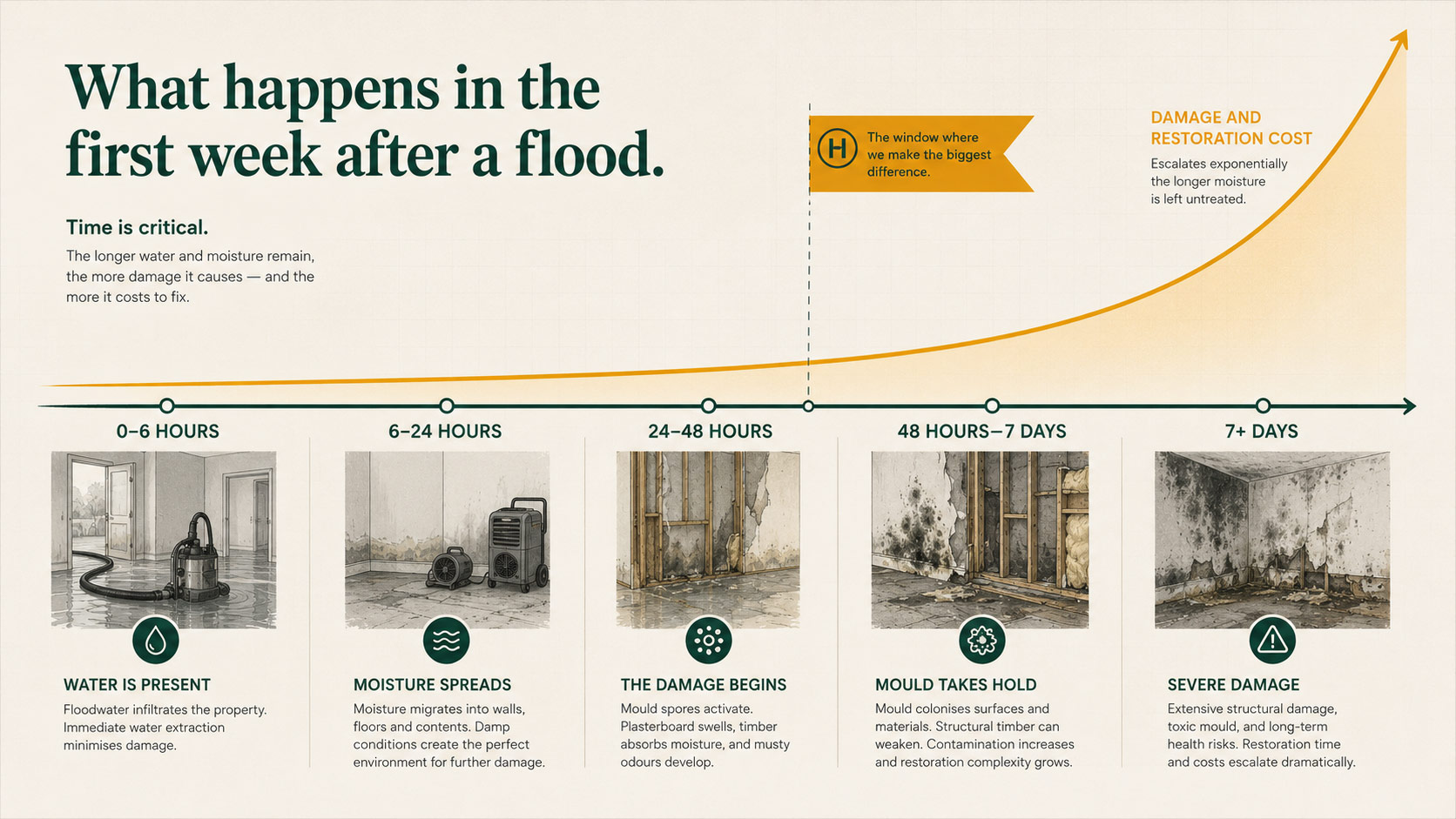
When a serious storm hits the Hunter, every restoration company in the region gets hit at once. Insurance assessors are booked out for weeks. Equipment is in short supply. The properties that come through it best are the ones that got proper attention in the first 24 to 48 hours — secured against further weather before more came through, water extracted before mould could take hold, damage documented before time blurred the evidence.
That early window is where local matters. We’re already in Newcastle. When the call comes in, we’re not flying contractors in from interstate or waiting on subcontractors to clear other jobs — we’re on the road. We secure the property fast, get the documentation done thoroughly while damage is still fresh, and start the drying process while the assessor’s report is still in the queue.
The actual restoration work follows the same standards as any other water or structural job — proper drying, proper materials handling, proper finishing. What’s different with storm and flood is the speed and availability you need at the start. Being local means we can give you both.
For major storm events, we prioritise emergency callouts and aim to be on-site within hours of the call. We give priority to properties that aren’t weather-tight (damaged roofing, broken windows) since every additional hour of exposure means more damage to deal with later. If your situation is urgent, say so when you call.
Most home and contents insurance policies cover damage from storms — including water damage, structural damage, and contents loss. Flood cover varies — some policies include it, some require it as an add-on, and some exclude flooding from creek or river overflow specifically. We can help with the documentation either way; checking your policy is worth doing as soon as you’re safe to.
Storm and flood damage usually involves multiple kinds of damage from a single event — water plus structural plus debris — and almost always involves an insurance claim. Internal water damage (burst pipes, appliance leaks) is usually a smaller, contained issue with no structural element. The water restoration work itself overlaps; the difference is mostly the scale, the insurance process, and the urgency of getting the property secured first.
es. Floodwater is rarely clean — depending on the source, it can contain sewage, agricultural runoff, fuel, chemicals, or biological contamination. This is treated as Category 3 water, with stricter handling requirements, protective equipment, and usually replacement of any porous materials it’s touched. We’ll assess and let you know what category you’re dealing with on arrival.
For minor storm damage, no. For significant flooding or structural damage that’s compromised the building, often yes — at least for part of the works. We’ll give you a realistic picture of what to expect on day one, so you can sort accommodation if it’s needed.
Both. We’re happy to do emergency securing and weather-proofing as a standalone job if you want to handle the rest of the restoration with someone else. We’d rather get your property safe now and let you decide on the rest later than have you wait while things get worse.
We respond to storm and flood callouts across Newcastle, Maitland, Lake Macquarie, the Hunter Valley, and Port Stephens. During major storm events when call volume is high, we prioritise properties that aren’t weather-tight — call as early as possible to be in the queue.
Call us as soon as it’s safe to. The first hours after a storm matter — we’ll get the property weather-tight fast, then we’ll work through the rest of the restoration with you properly.