SERVICING HUNTER REGION, NEWCASTLE, CENTRAL COAST, CANBERRA
Contents restoration across Newcastle and the Hunter Region — saving what’s salvageable, documenting what isn’t, with the same care you’d want for your own things.
First job is going through everything systematically — what’s salvageable, what isn’t, and what needs specialist treatment beyond our scope. We give you an honest assessment with photos and inventories for both categories, which is what you need for insurance either way. If we think something’s not worth restoring, we’ll tell you up front — better than spending your money on something that won’t come back the way you’d want.
Items that can be restored are carefully packed out and moved to our facility, where we’ve got the space and equipment to do the work properly. Each item is inventoried, photographed, and tracked through every stage. You’ll know where everything is — and if you need to access specific items during the process, that’s usually fine with a bit of notice.
The actual restoration work — cleaning, deodorising, restoring finishes, repairing where possible. Different items need different techniques: ultrasonic cleaning for delicate items, ozone treatment for soft furnishings with smoke odour, careful hand-cleaning for documents and photographs, specialist repair for damaged timber. For items that need specialist expertise beyond our scope (high-value antiques, museum-quality artworks, fine art restoration), we coordinate with the right specialists rather than overreaching.
Once restoration’s complete, items are packed back and returned to the property. We coordinate with you on timing — restored contents usually come back once the building restoration is finished, but we can stage delivery differently if certain items need to come back sooner.
Most damage restoration work follows clear technical processes — you fix what’s damaged, you replace what can’t be fixed, you document the lot for insurance. Contents restoration is the same in some ways, but different in one important one: a lot of what we’re working with has value that doesn’t show up on an insurance assessment.
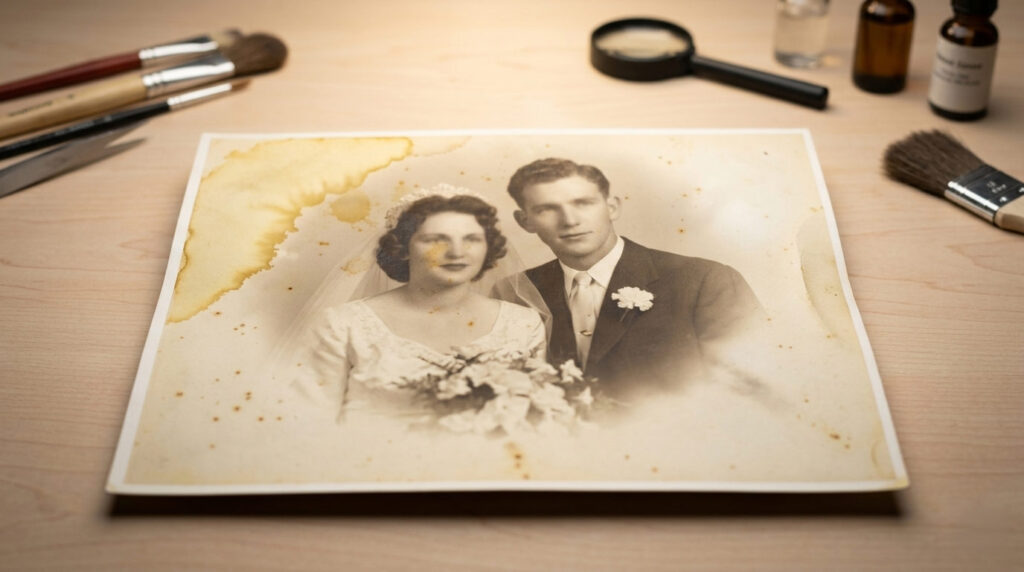
A burned photo album. A water-damaged piano that came from your grandmother. The handprint artwork your kids made in primary school. The wedding dress in the wardrobe. Insurance might pay you to replace these things, but the replacement doesn’t actually replace them.
That’s where contents restoration earns its place. Some items we can save fully. Some we can save partially. Some we can’t save at all — but even then, we treat them with the care they deserve while we document them properly for your claim. The technical work is the same kind of work we do across the rest of the business. The difference with contents is that it pays to remember what we’re actually handling.
Combination of experience and proper assessment. We look at the type of damage (water vs smoke vs fire vs mould), how long the damage has been there, the material of the item, and any specialist requirements. We give you our honest assessment with photos — if we think something’s not worth restoring, we’ll tell you. Better to be upfront than to spend your money on something that won’t come back the way you’d want.
Depends on the items and the scope. Most jobs run two to six weeks once items are at our facility — small items (documents, electronics) often faster, complex restoration (furniture refinishing, delicate textiles) longer. If certain items are urgent (legal documents, kids’ irreplaceable items, things needed for daily life), we can prioritise those.
At our facility — secure, climate-controlled, fully inventoried. Each item gets tracked through every stage. You’ll get a copy of the inventory before pack-out, and we can give you status updates whenever you want them. If you need to access specific items during the process, that’s usually fine with a bit of notice.or moisture readings throughout and won’t call the job dry until the numbers confirm it.
Most home and contents insurance policies cover contents restoration as part of a damage claim. Insurers often prefer restoration over replacement because it’s cheaper — particularly for furniture and harder-to-replace items. We provide the documentation and itemised reports your insurer needs, and we’ll liaise with assessors directly if that helps.
Often, yes — even from quite significant damage. Photos and paper documents are more recoverable than people expect, if they’re treated quickly and properly. Water-damaged photographs can usually be saved if they haven’t fully dried into themselves. Burned paperwork can sometimes be partially recovered. For specialist work (high-value photographs, museum-grade restoration), we coordinate with specialist photo and document restorers.
We tell you straight, with photos and an explanation. If something’s beyond restoration, we inventory it properly for your insurance claim — condition photos, original details where you know them, replacement cost estimates if helpful. The point of the assessment phase is to give you a clear picture either way, not just to find more work to do.
Yes — most clients find it useful, particularly for items with sentimental value where you can give us context (where it came from, what condition it was in originally, whether replacement is even possible). The on-site assessment usually takes a couple of hours for a typical residential property.
We handle contents restoration across Newcastle, Maitland, Lake Macquarie, the Hunter Valley, and Port Stephens. Items are restored at our facility and returned to your property when the work’s complete. Not sure if we cover your area? Give us a call. call — chances are we do.
Tell us what’s been damaged and what kind of damage you’re dealing with. We’ll come and assess, give you an honest read on what’s salvageable, and walk through the options — including the insurance side. Free assessments, no pressure.