
SERVICING HUNTER REGION, NEWCASTLE, CENTRAL COAST, CANBERRA
Proper mould remediation across Newcastle and the Hunter Region — treating the source as well as the surface, so it doesn’t come straight back.
First job is working out what’s actually going on. We assess the visible mould, but more importantly, we work out what’s causing it — a leak, a ventilation problem, condensation from a thermal bridge, or moisture trapped from a past event. Without finding the cause, any treatment is temporary.
Mould releases spores when disturbed, and they spread to clean parts of the property if you’re not careful. We set up physical containment — sheeting, and negative air pressure where the job calls for it — to isolate the affected zone before we start removing anything. This protects the rest of your home and the air you’re breathing while we work.
Surface mould gets removed and treated with appropriate antimicrobials. Mould-affected porous materials that can’t be salvaged — sections of plasterboard, soft furnishings, contaminated insulation — get safely removed and disposed of. We work in full PPE because mould remediation isn’t a job for shortcuts.
Once the contamination’s out, we fix the underlying cause — repairing the leak, improving ventilation, addressing whatever was creating the moisture. Then we verify the job’s done properly with clearance checks and documentation, so you’ve got a record that the property’s been remediated to standard.
The most common mistake in mould treatment is treating it like a cleaning job — spray, wipe, repaint, done. The problem is that mould isn’t the actual issue; it’s the visible sign of a moisture problem that’s still happening. Treat the surface without addressing the cause, and the mould comes back in weeks. Sometimes worse, because now it’s inside the new paint.
Proper mould remediation means finding the moisture source first, removing the contamination safely (not just wiping it), and fixing whatever caused it — whether that’s a slow leak, a ventilation issue, or a structural cause. It takes more time and costs more than a surface clean. But it actually solves the problem.
That’s the work we do. If your situation only needs a clean — small surface mould in a well-ventilated bathroom, for example — we’ll tell you that honestly and you can sort it yourself. If it needs proper remediation, we’ll explain exactly why and what’s involved.
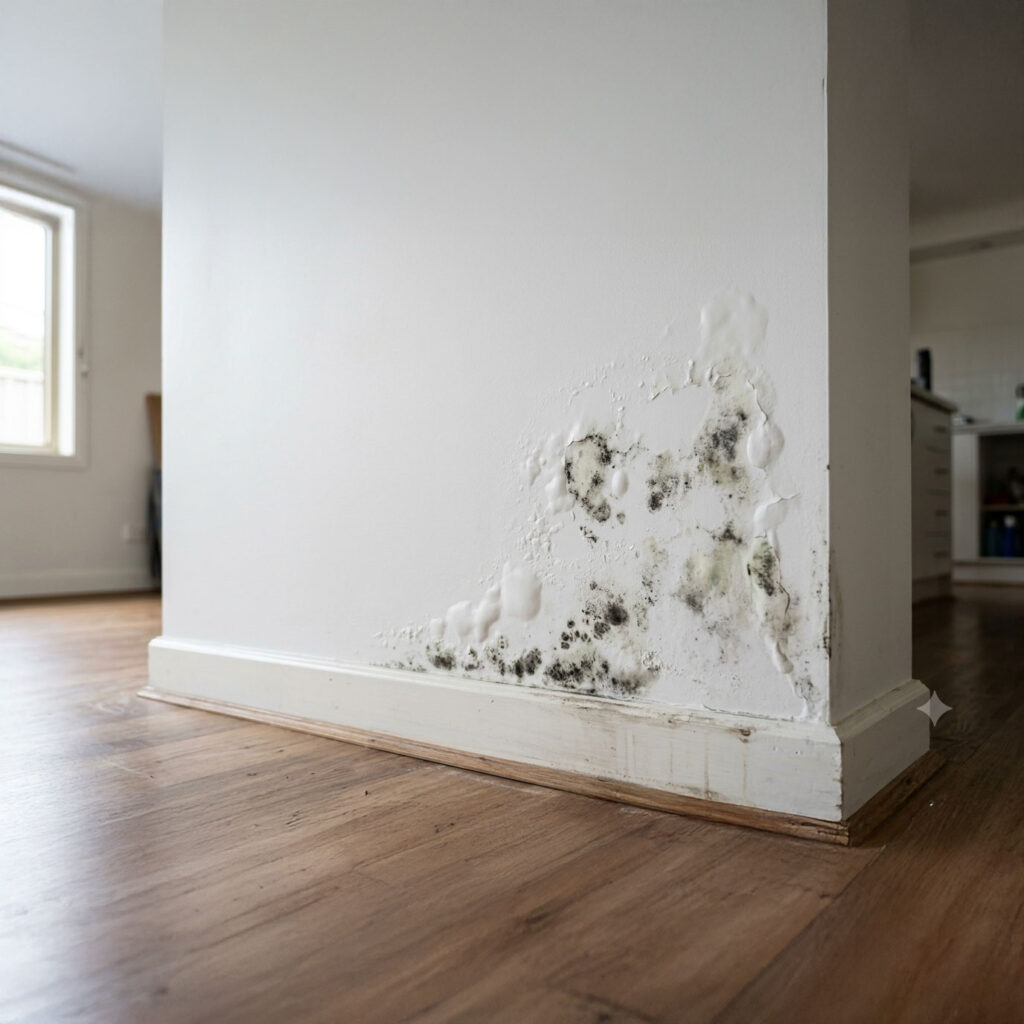
For most people, occasional small mould exposure is unpleasant but not harmful. Larger or longer exposure can cause respiratory symptoms, allergic reactions, and headaches — particularly for kids, elderly people, or anyone with asthma or compromised immunity. Black mould gets a lot of attention but isn’t always present, and the type matters less than the volume and how long you’ve been exposed. Short answer: don’t ignore it, especially if you’ve got vulnerable people in the property.
Sometimes, yes — small surface mould in a well-ventilated area can often be cleaned with proper products and care. We’ll tell you honestly if that’s your situation. But anything beyond a small surface patch, anything recurring, anything where you can’t see the full extent, or anything affecting porous materials (plasterboard, soft furnishings, carpet) — that needs proper remediation. DIY cleaning that doesn’t address the source usually makes things worse long-term.
Combination of visual inspection, moisture meters, thermal imaging, and sometimes air movement testing. Often the source is straightforward — an obvious leak, poor ventilation, a known past event. Sometimes it’s hidden, which is where the assessment gear earns its keep. We’re not finished assessing until we can tell you with confidence what’s causing it.
Depends on the scale. A bathroom or single-room job is often one to two days of works, plus verification. Larger jobs — multiple rooms, significant material removal, complex source remediation — can be a week or more. We give you a realistic timeframe upfront, not an optimistic one.
If we’ve done the job properly — source addressed, contamination removed, materials replaced where needed — the original mould shouldn’t return. We document the works so you’ve got proof of remediation. If new mould appears later from a new moisture event (a different leak, a new ventilation issue), that’s a new problem to solve — but it won’t be the same mould coming back.
It depends on the cause. Mould from a sudden, identifiable event (burst pipe, storm damage, recent flooding) is often covered. Mould from gradual or undetected issues (slow leaks, long-term condensation, lack of maintenance) is often not. We’ll document the cause and the work either way, so you’ve got what you need for a claim if there’s one to make.
Most jobs don’t require you to move out — the containment we set up isolates the work area from the rest of the property. For larger jobs, particularly ones involving extensive material removal or sensitive occupants (young kids, anyone with serious respiratory conditions), it may be worth staying elsewhere for a few days. We’ll talk through it before we start so you know what to expect.
We respond to mould callouts across Newcastle, Maitland, Lake Macquarie, the Hunter Valley, and Port Stephens. Not sure if we cover your area? Give us a call — chances are we do.
First step’s a call. Send us a few photos or tell us what you’re seeing, and we’ll let you know whether it’s a simple clean or something that needs proper remediation. Free quotes, honest advice, no pressure.